5 Reasons Abuja Real Estate Beats Bank Saving in 2026

If you live in Abuja, you know the city is expanding faster than any bank interest rate can keep up with. Here is why your ₦20 Million is better off in a plot in Wuye or Katampe than in a fixed deposit.
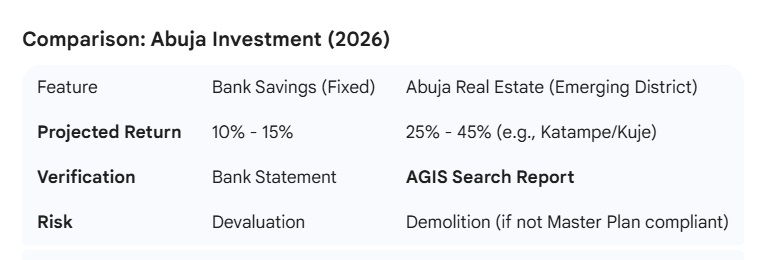
1. The Infrastructure “Gold Mine”: In 2026, the completion of major road networks like the Outer Northern Expressway (ONEX) has turned formerly “far” areas into premium hubs. A bank gives you 12% interest; a property in a developing Abuja district can appreciate by 25–40% once the asphalt hits the road.
2. The Rental “Instant Income Engine”: Districts like Games Village and Gwarinpa are seeing record-high demand for short-lets and corporate housing. While bank interest is taxable and fixed, rental income in Abuja typically rises by 10-15% annually to match the high cost of living.
3. Inflation-Proof Assets: With Nigeria’s inflation still a factor in 2026, cash in a bank is “melting.” Real estate is a hard asset. As the price of cement and labor increases, the value of your existing house in Lugbe or Lokogoma rises automatically.
4. Capital Gains in Prime Districts: Areas like Guzape and Maitama II are the new enclaves for the elite. Investing here isn’t just about saving money; it’s about “Prestige Appreciation.” These properties hold value in “real terms,” even when the Naira fluctuates.
5. Direct Government Control (AGIS): Unlike the volatile stock market or bank policies, Abuja’s land is centrally managed by AGIS. If your papers are “clean,” your investment is one of the most secure in Africa.
Comparison: Abuja Investment (2026)